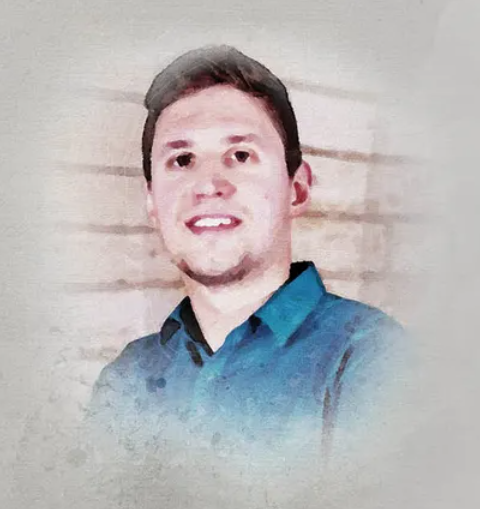
Luka Svet is a postdoctoral researcher at St. Jude Children's Research Hospital. He investigates host-microbe interactions to uncover novel pathways of bacterial pathogenesis. In this Postdoc Portrait interview, he shares the importance of his work and what he hopes his research will accomplish.
Deciphering Staphylococcus aureus Transcriptome Dynamics
Q | What scientific problem are you trying to solve?Antimicrobial resistance (AMR) is a major and growing global health threat, and Staphylococcus aureus is a leading cause of severe bacterial infections, including skin, bloodstream, pulmonary, and device-associated infections. Despite extensive study, we still have an incomplete understanding of how S. aureus adapts to the host environment during infection, particularly how its responses differ between distinct anatomical niches such as the skin and lungs. This knowledge gap limits our ability to identify the bacterial processes that enable survival, persistence, virulence, and immune evasion in vivo.
A further challenge is that more than 17 percent of the S. aureus genome consists of genes with unknown or poorly characterized functions, representing a largely unexplored reservoir of potential virulence mechanisms. Our research seeks to determine how S. aureus dynamically reprograms its transcriptome during the early stages of infection and how these responses are shaped by different host tissues and immune environments. By comparing human- and rodent-adapted isolates and integrating bacterial transcriptomics with host immune profiling and functional genetic studies, we aim to identify niche-specific bacterial pathways and previously unrecognized determinants of pathogenesis that could represent novel therapeutic vulnerabilities.
Q | What drew you to microbiology and computational biology?I was drawn to this field by the combination of biological complexity and the opportunity to use data to answer difficult, non-routine questions. I particularly enjoy working with large and complex datasets, developing computational approaches to extract meaningful biological insights, and using quantitative analysis to understand problems that cannot be addressed through straightforward experimentation alone. Research in microbial biology and antimicrobial resistance provides an especially compelling environment for this because pathogens are constantly adapting, creating new questions that require both creativity and rigorous analysis.
I am also motivated by the challenge of continuously learning. My work has allowed me to develop and integrate skills in microbiology, genomics, transcriptomics, bioinformatics, and computational biology, while continually improving my ability to analyze and interpret complex biological systems. I find the process of tackling problems for which there is no established solution particularly rewarding.
Ultimately, I am driven by a sincere belief that I can make a meaningful contribution to the field by bringing new ideas, analytical perspectives, and insights to important biological questions.
Q | What's one thing you learned from your research that you didn't expect?One of the most important things I learned from this research was how far from the initial hypothesis can be from what the data ultimately reveal. I expected some of our findings to follow established models of Staphylococcus aureus biology, but the results repeatedly challenged those assumptions and forced us to reconsider our interpretation of the system. This was a valuable reminder that research is not about confirming what we expect to find, but about being willing to follow the evidence, even when it leads somewhere unexpected.
I also learned the importance of persistence. Some of the most interesting findings emerged only after experiments failed, produced ambiguous results, or required us to approach the question from a completely different angle. Trying different methods, techniques, and analytical approaches ultimately opened avenues that we have not considered initially.
Q | If your research succeeds, what could it change for science or society?It could contribute to better treatment strategies for S. aureus infections and, ultimately, perhaps help inform the development of an effective vaccine.
Q | What question are you most excited to answer next?I am most excited to tackle questions involving complex biological systems and large, multidimensional datasets.